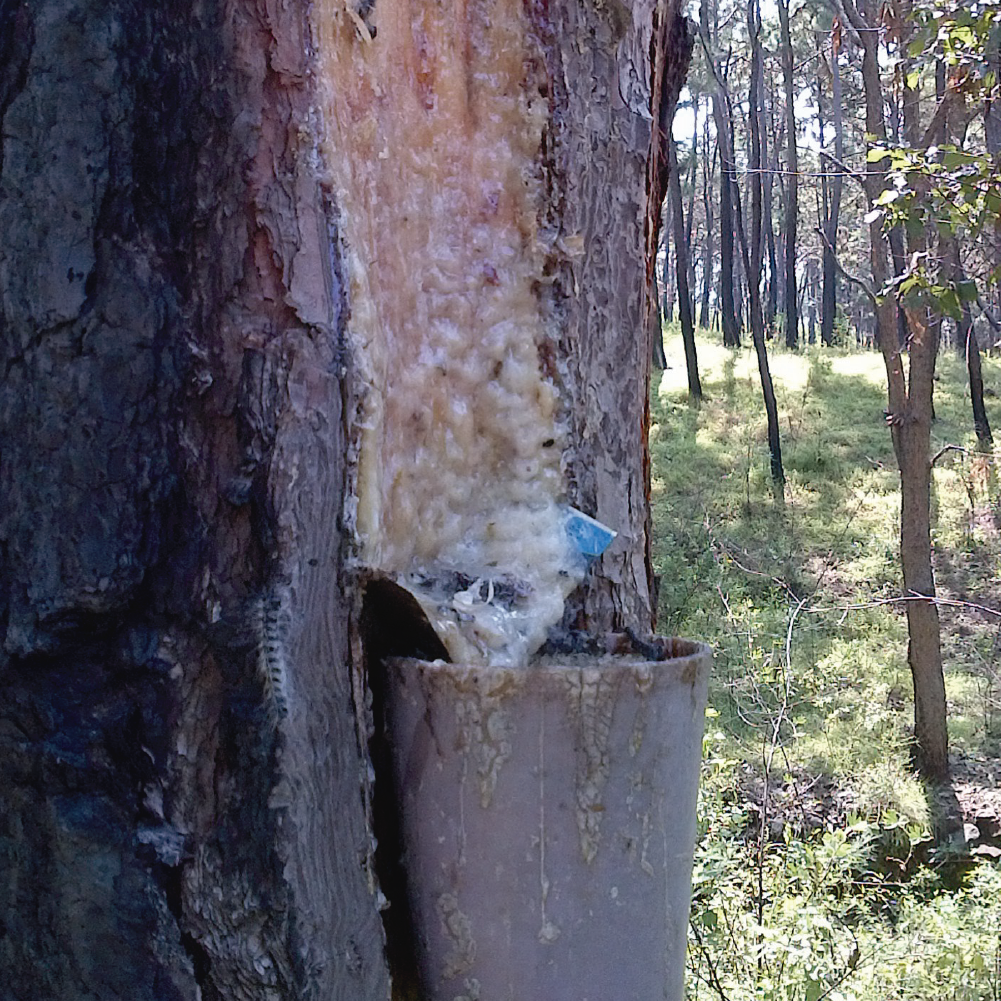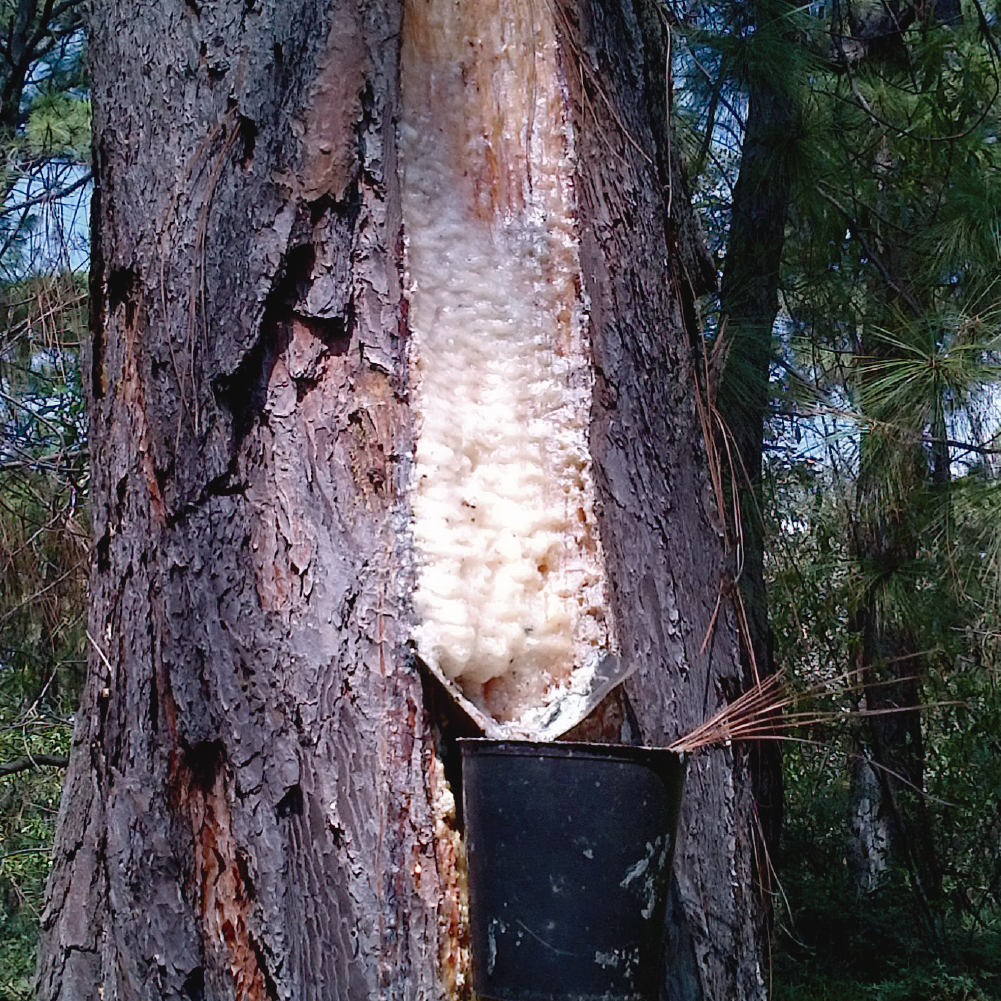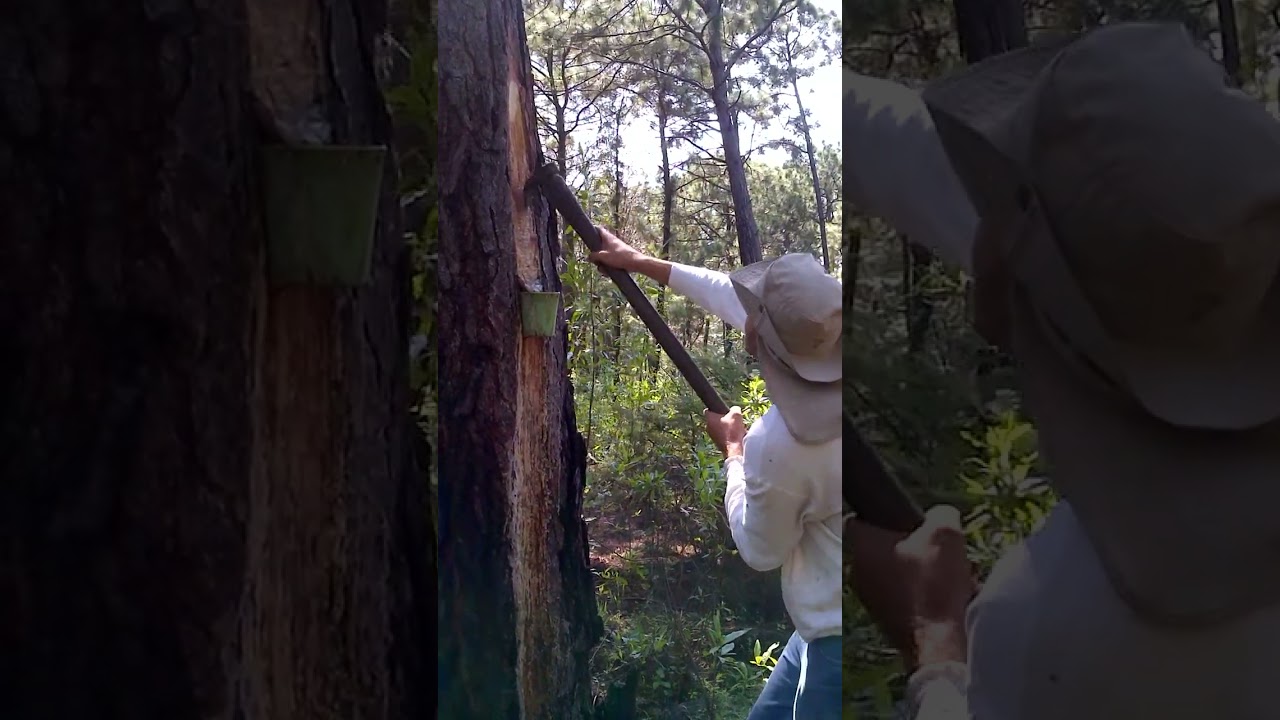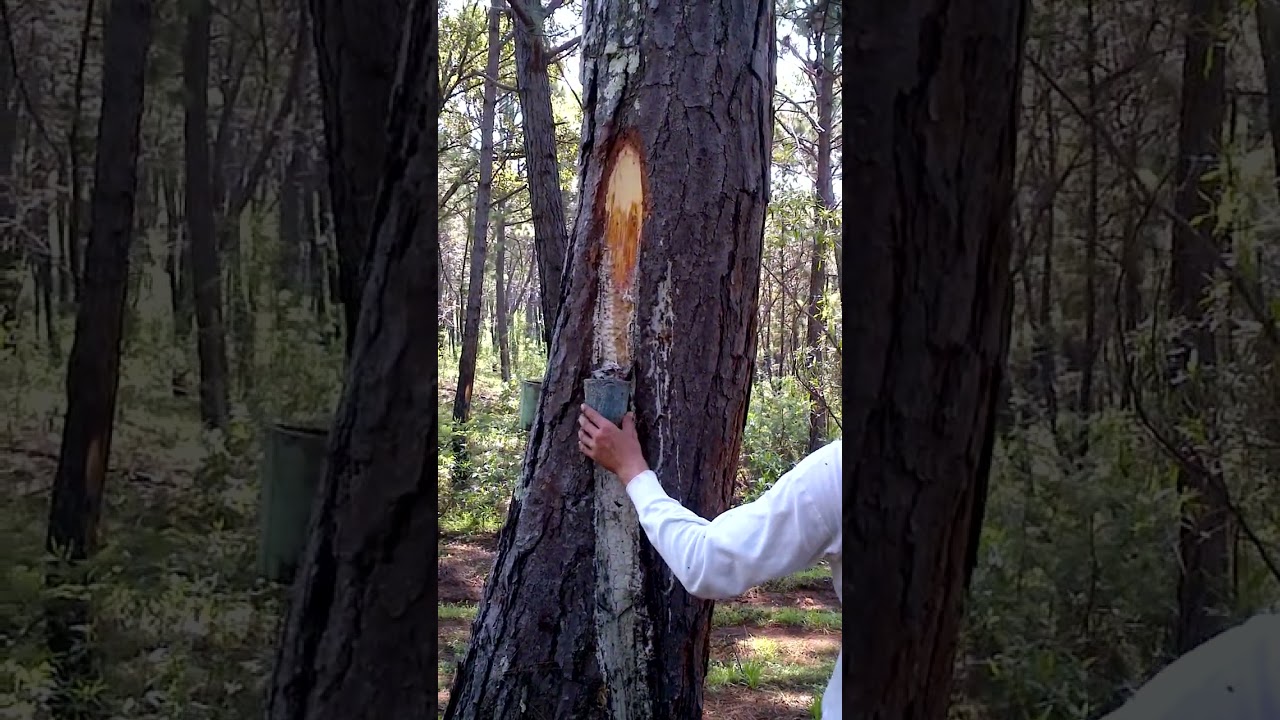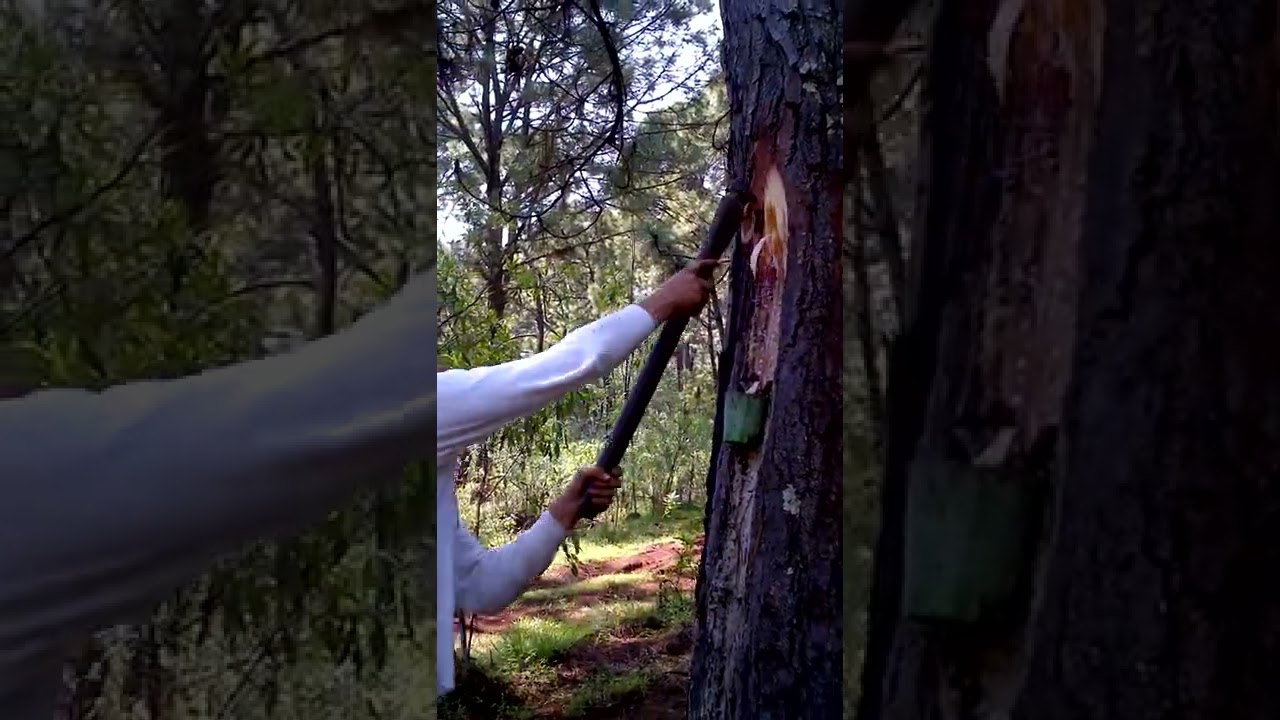
Resin Harvesting
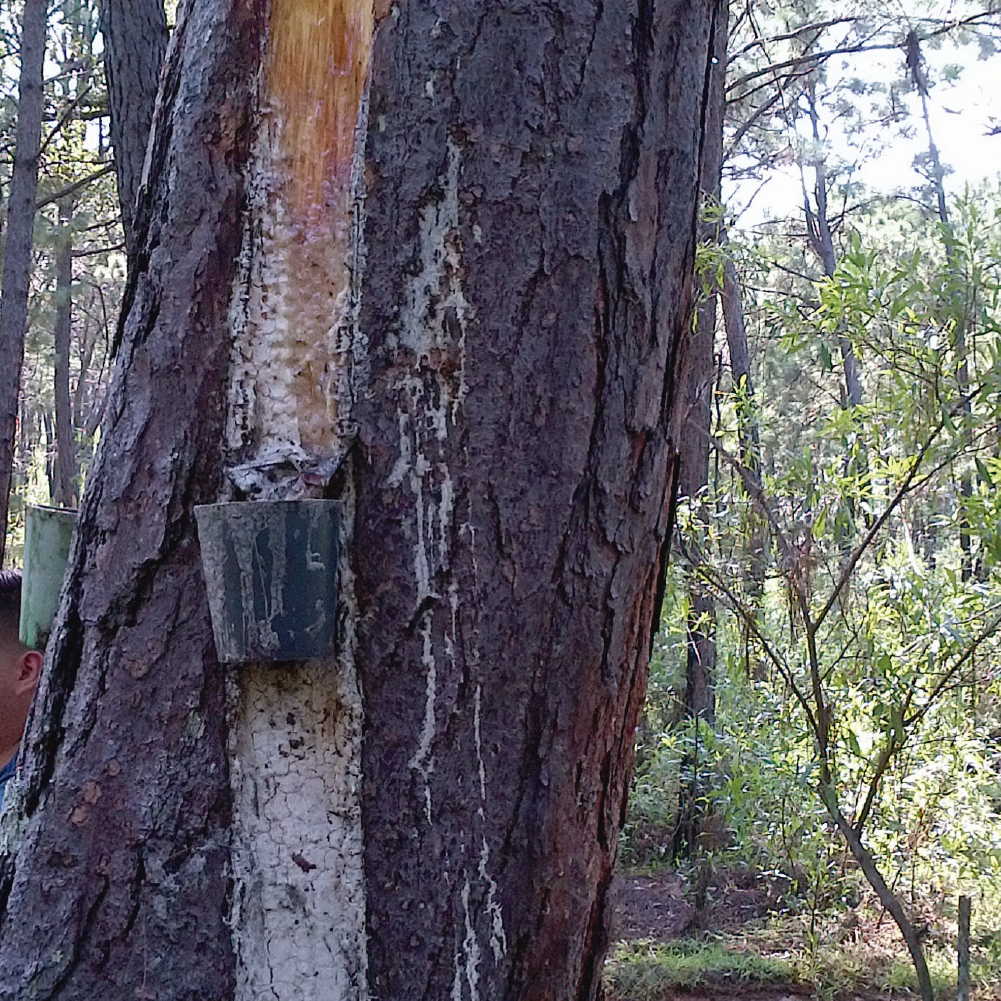
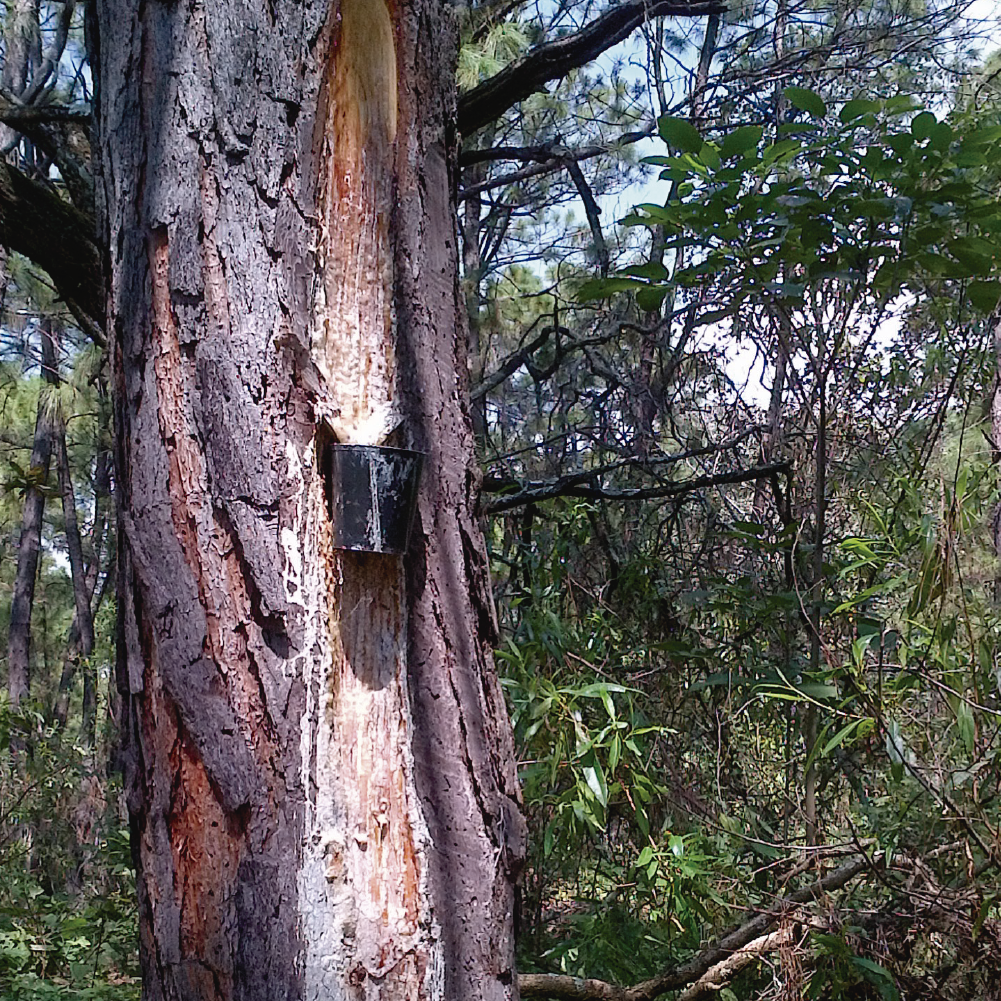
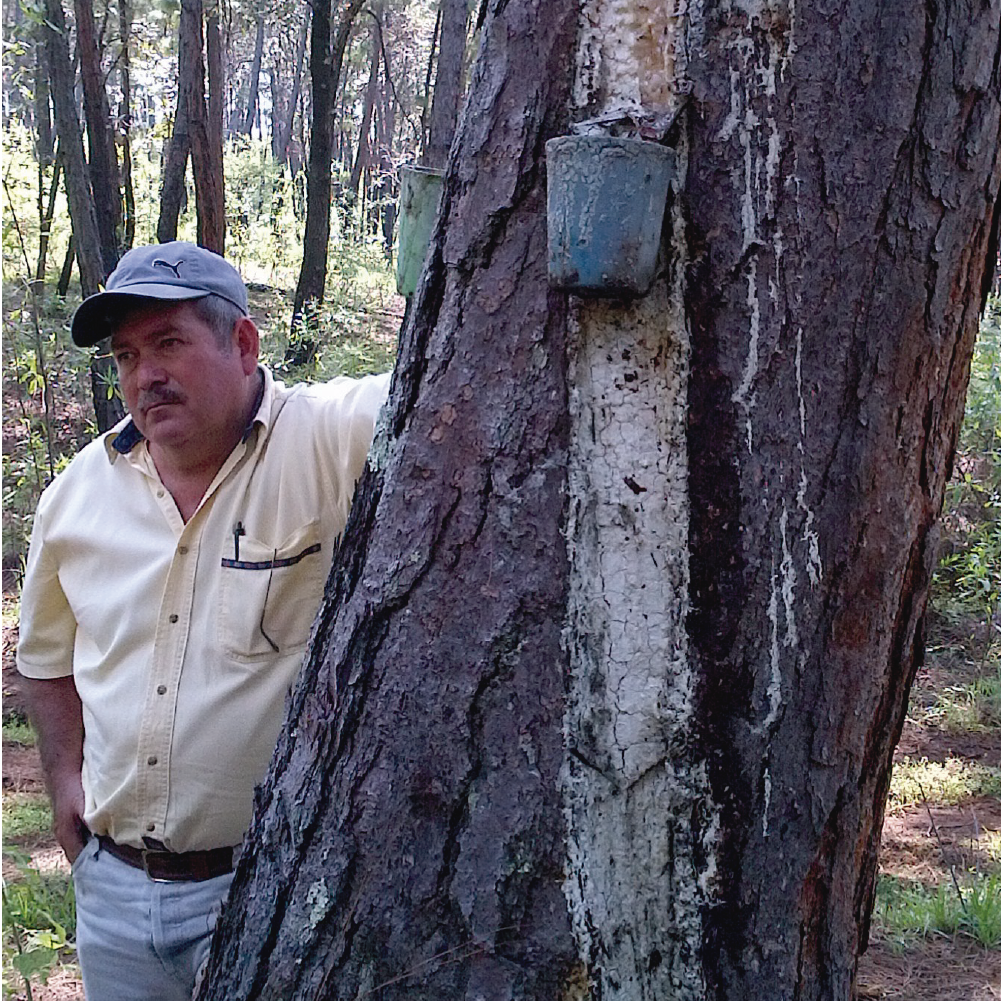
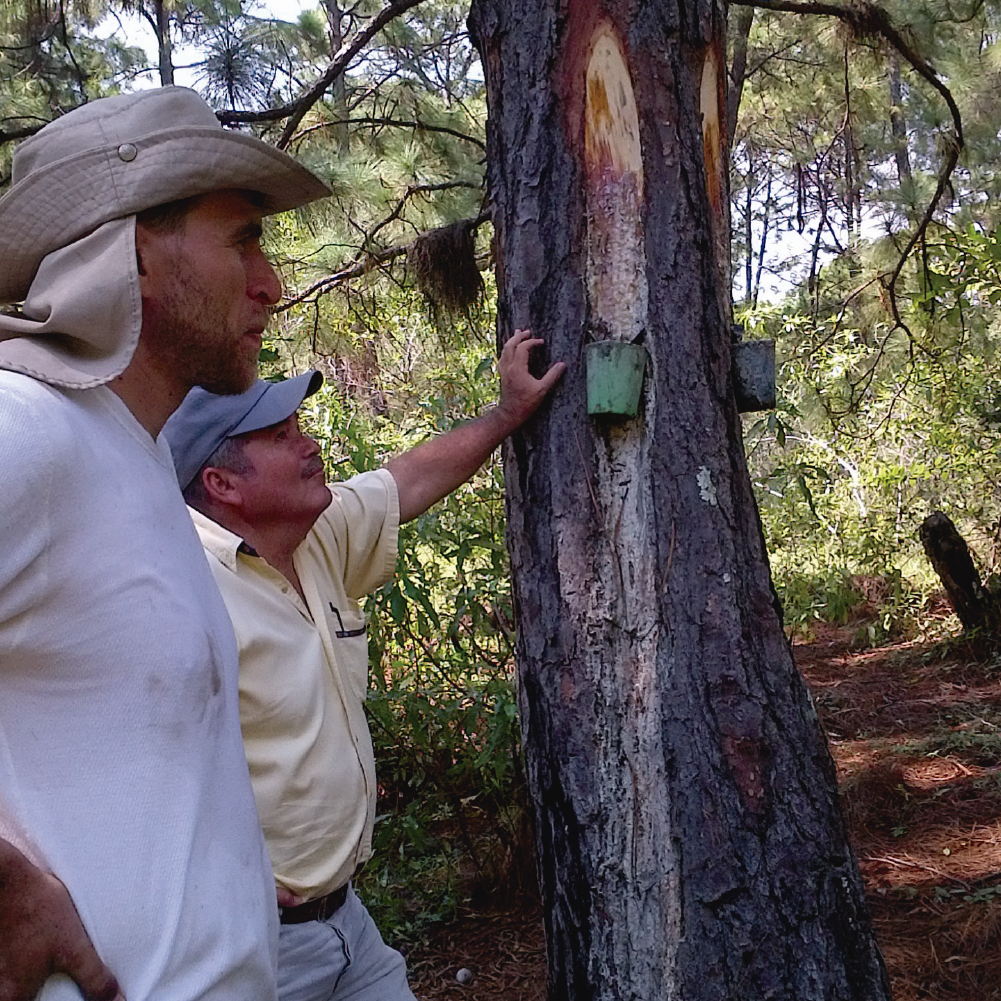
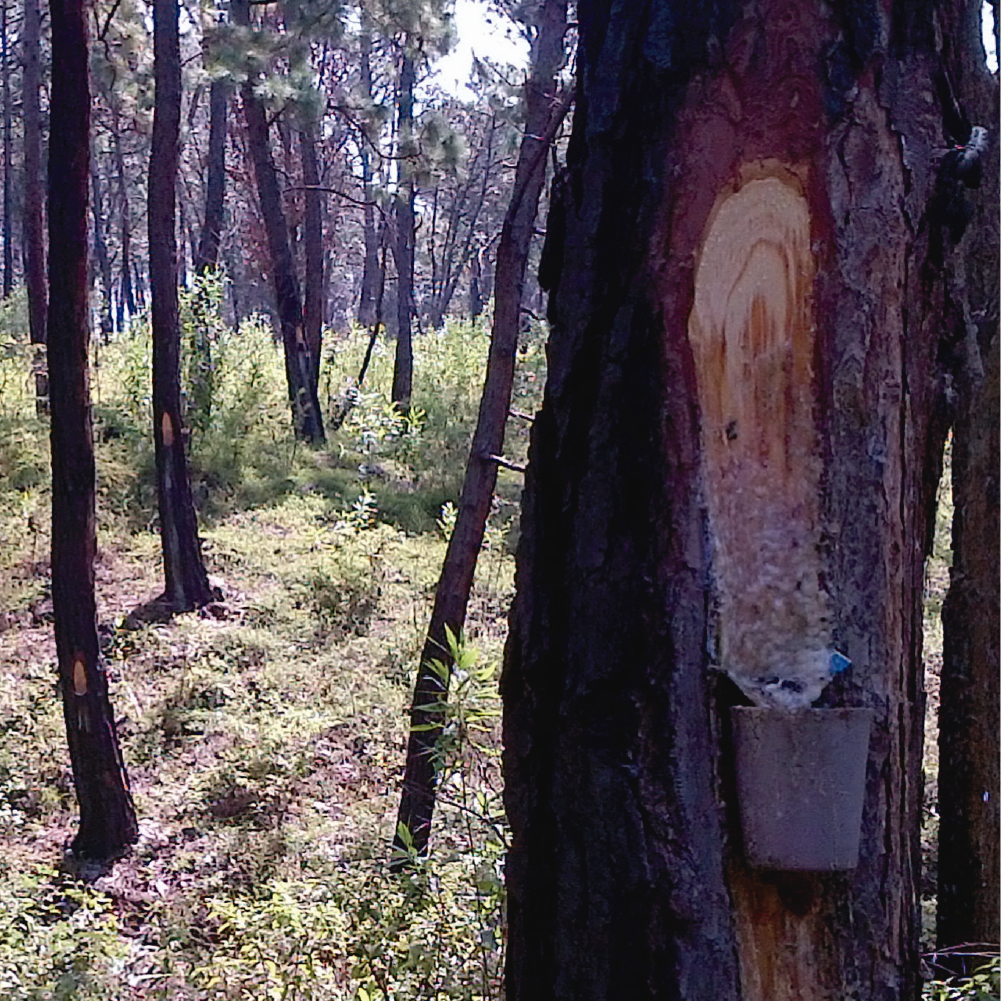
In Mexico, natural pine resin is primarily harvested using the French, or Hugues, method, developed by Pierre Hugues in the 1840s. This traditional harvesting technique includes the following stages:
• Bark Preparation – The outer bark is removed to expose the tree and facilitate resin flow.
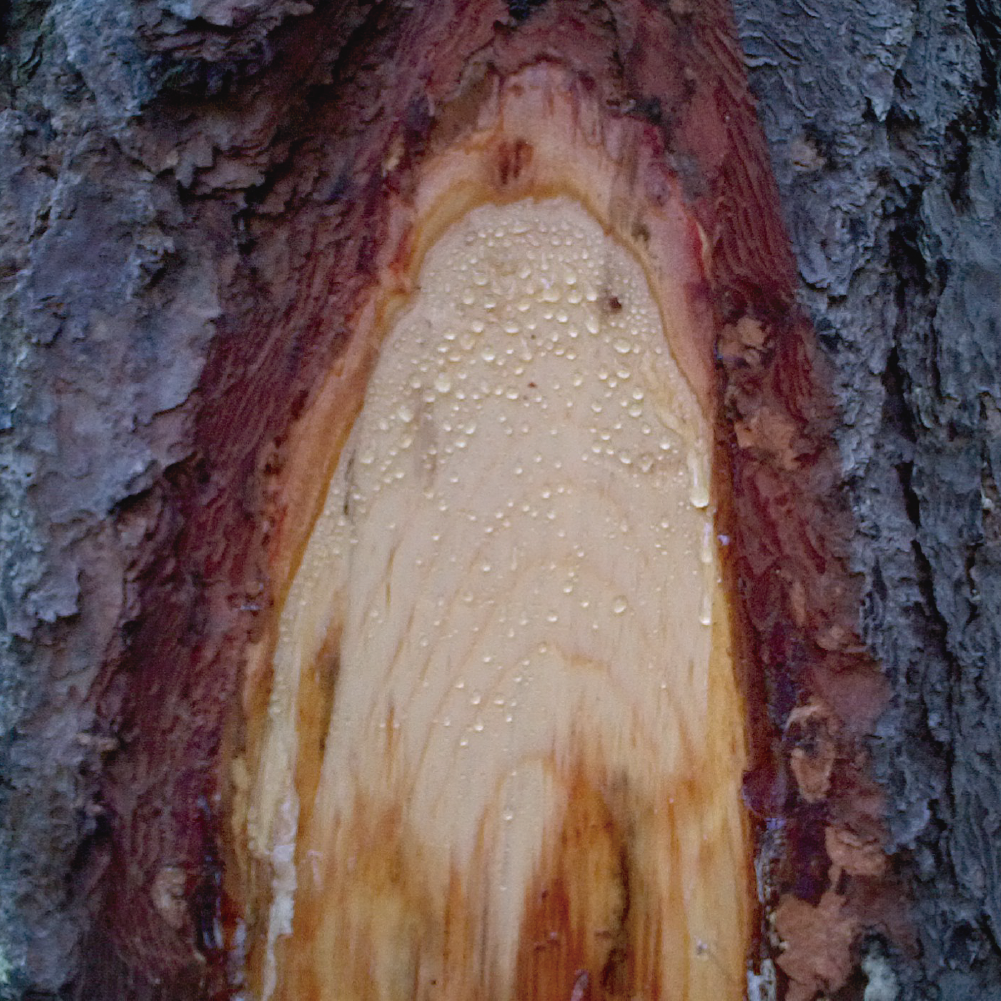
• Face Opening – A cut is made at the base of the pine tree to initiate resin extraction.
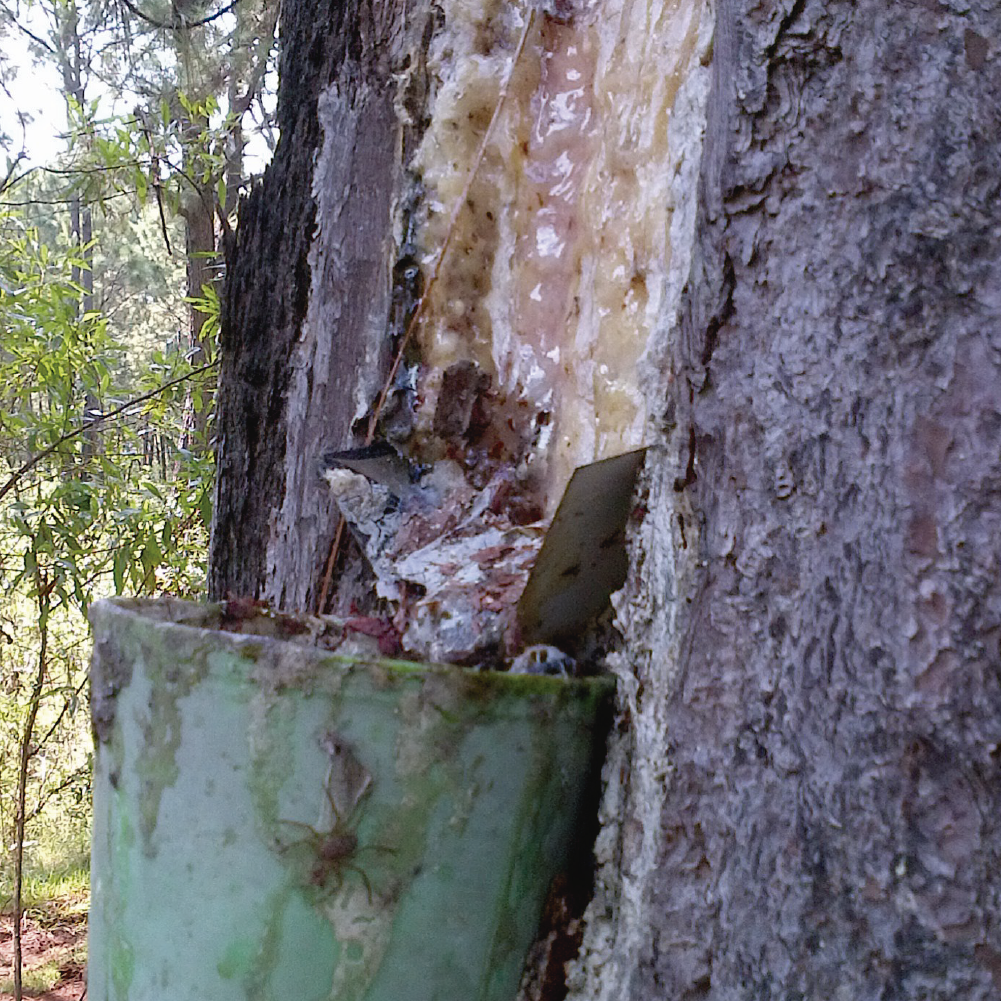
• Gutter Installation – A metal gutter is installed to channel the resin into a collection container.
• Chipping – Periodic cuts are made to stimulate the continuous flow of resin.
• Collection – The resin is gathered and stored in collection containers.
• Scraping – Hardened resin accumulated on the tree is removed for recovery.
This harvesting method remains the standard practice in Mexico under NOM-026-SEMARNAT-2005.
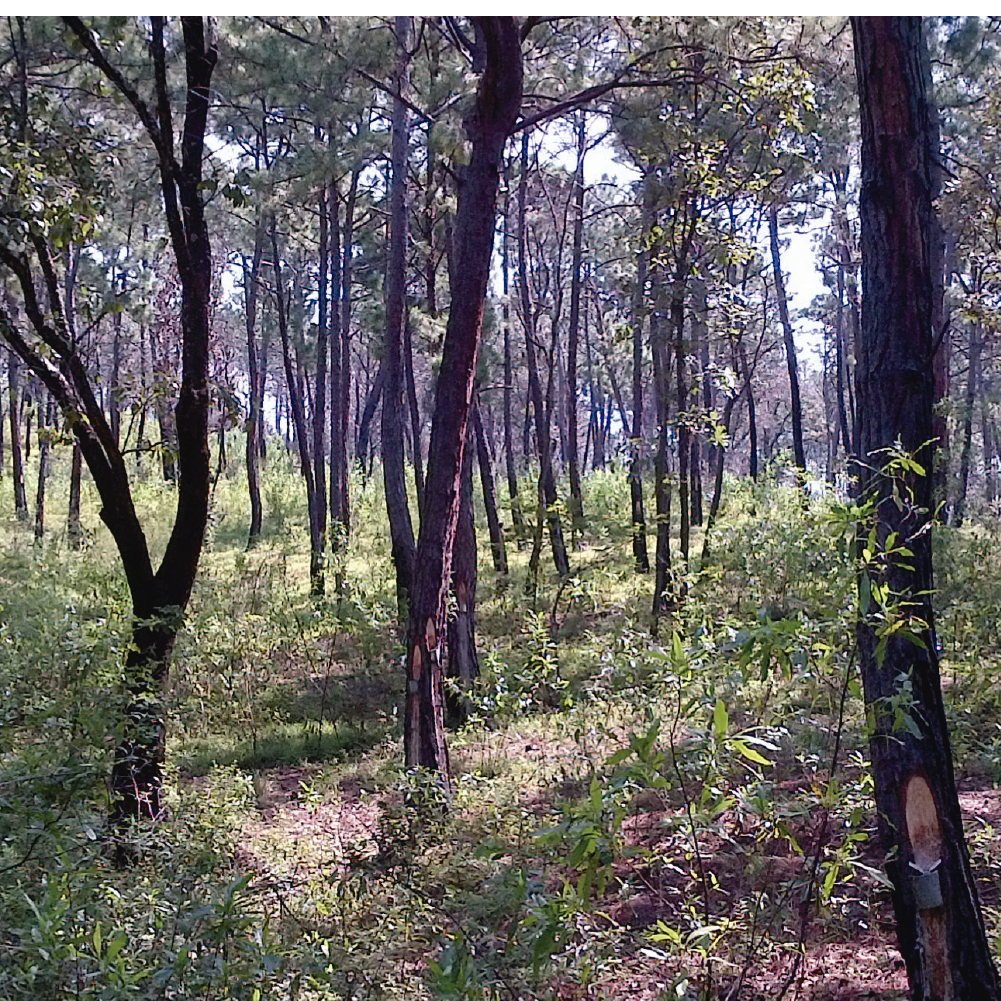
In the state of Michoacán, resin harvesting is carried out without chemical stimulants and follows two seasonal cycles:
• Dry Season (March–June) – Higher resin yields due to improved access to forest areas.
• Rainy Season (August–November) – Lower production caused by more difficult transportation conditions and resin losses from rainfall runoff.
Hugues or French method.- slices of 8 to 10cm wide are cut into the trunk every 10 to 15 days, reaching the secondary xylem. The cut surface may extend to 1.8m from the ground after two years of extraction. This method was developed in the mid-nineteenth century in France and is now widely used including the natural forest in Mexico.

References
CONAFOR. (2012). La produción de resina de pino en México. SEMARNAT. http://www.conafor.gob.mx:8080/documentos/docs/43/6046La%20producci%C3%B3n%20de%20resina%20de%20pino%20en%20M%C3%A9xico.pdf
López, O. M. (2021). Selección de árboles plus de Pinus leiophyolla schl & cham altamente4 productores de resina en Michoacán, México [Tesis de grado, Universidad Autónoma de Nuevo León]. http://eprints.uanl.mx/22116/1/1080315145.pdf
Palacios-Vázquez, A. L., & Maza-Villalobos, S. (2022, junio 7). Resina: El oro líquido. El Colegio de la Frontera Sur. https://www.ecosur.mx/resina-el-oro-liquido/
Quiroz, C. J. A., & Magaña, A. M. A. (2015). Resinas naturales de especies vegetales mexicanas: Usos actuales y potenciales. Madera y bosques, 21(3), 171–183.
Zentella, C. A. (2014). Aprovechamiento de resina de pino en la zona oriente de San Miguel Chimalapa, Oaxaca: De la conservación de recursos naturales al desarrollo sustentable. Fundación Comunitaria Oaxaca. https://www.redeamerica.org/transformadores/es/formulario/public/archivos/16/1/ASRN_Fundacion%20Comunitaria%20Oaxaca.pdf